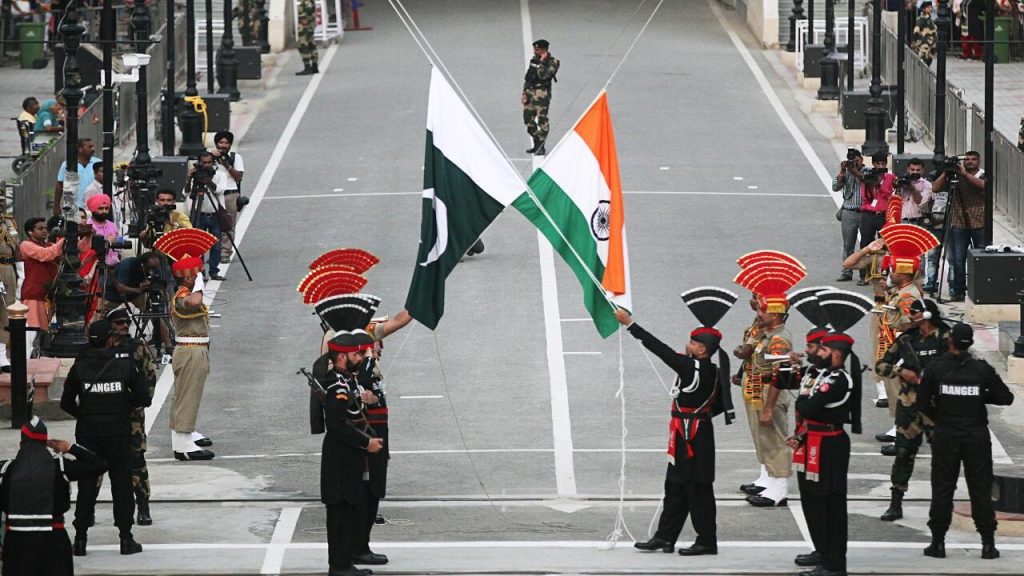
Pakistani and Indian officials held a rare meeting this week in the Sri Lankan capital, Colombo, attended by former diplomats, retired military officers, and politicians from the ruling coalitions of both countries, within the framework of what is known as the “Track 1.5” dialogue, according to informed sources.
Although several rounds of these informal interactions have been held between the two sides since last year’s four-day conflict, the participation of serving officials from Pakistan and India in such talks remains unusual.
Sources told the local Express Tribune newspaper on Thursday that officials from the two countries’ foreign ministries attended the dialogue, which also brought together former diplomats, retired military officers, and politicians. Among the participants was a prominent representative of India’s ruling Bharatiya Janata Party, alongside a senior politician from Pakistan’s ruling coalition, as well as a former Indian army chief and a retired two-star Pakistani officer who has been engaged since his retirement in back-channel outreach efforts between the two countries.
The newspaper explained that it is aware of the participants’ identities but is withholding their names given the sensitivity of the matter, noting that Pakistan’s Foreign Ministry declined to comment when contacted.
Sri Lankan media reports confirmed that the dialogue was held between the Indian and Pakistani delegations, indicating that its main objective was to strengthen communication mechanisms in times of crisis and to explore measures to prevent and contain potential escalation. According to the reports, the two sides exchanged views during the meetings and held frank discussions on issues related to terrorism and water, and also examined ways to transfer the outcomes of these talks to the official “Track One” channels, which are based on direct communication between serving government officials from the two countries.
The precise nature of the discussions was not immediately clear, but a retired diplomat who participated in earlier rounds of these meetings indicated that they are part of broader efforts to explore the potential for future cooperation. He added that while some Indian participants appeared inclined toward dialogue, the general assessment suggests that the Modi government is not yet prepared to take a step in that direction.
Many observers, including some voices in India, believe that New Delhi’s policy of diplomatically isolating Pakistan has not achieved the desired results. Since last year’s conflict, Pakistan’s geostrategic standing has continued to rise, while the Iran crisis has bolstered Islamabad’s profile and regional importance. Against this shifting backdrop, an opinion has begun to take shape in some Indian circles—including voices linked to the Rashtriya Swayamsevak Sangh (RSS)—that New Delhi may need to reconsider its policy toward Islamabad.
اشترك لتصلك أبرز التغطيات والقصص الحصرية من فريق الأسطل مباشرةً إلى بريدك.