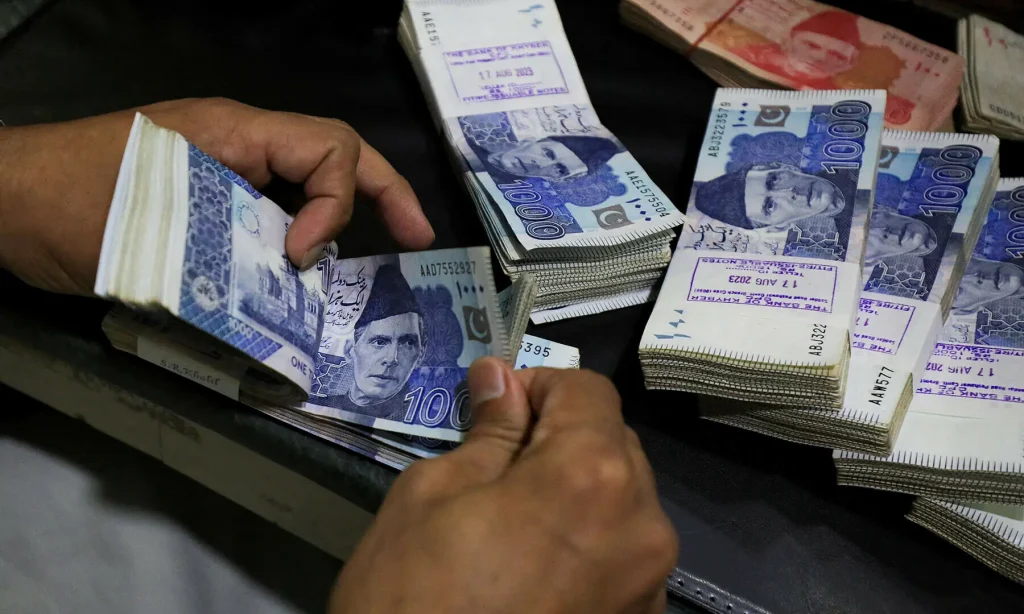
Pakistan’s Auditor General has uncovered widespread financial mismanagement in the federal government’s civil accounts, identified during its audit for the 2025–2026 fiscal year, tallying irregularities worth billions of rupees that included unauthorized expenditures, weak oversight, uncollected dues, and governance failures across a number of ministries, departments, and autonomous bodies.
According to The News, the 399-page report reveals that the Higher Education Commission topped the institutions with 31 audit observations, followed by the Trade Development Authority of Pakistan (18), the Ministry of Food Security (17), the Ministry of Science and Technology (16), the National Heritage and Culture Division (12), the Agricultural Research Council (12), the Atomic Energy Commission (12), the Ministry of National Health (11), and the Education Division (10).
Among the most prominent findings of the report was an observation concerning the Cabinet Division, as auditors questioned how a sum of 75 billion rupees—allocated to federal and regional development projects under the “Sustainable Development Goals Achievement Program,” known as the parliamentarians’ projects—had been spent. The report noted that the division had failed to obtain the mandatory monthly progress reports and completion certificates from the implementing agencies, and that in the absence of data classified by project and region, it was impossible to verify whether the distribution and use of the funds aligned with the goal of balanced regional development. Despite repeated inquiries, the division did not respond. The auditors recommended establishing a centralized digital system to track the allocation and use of these funds, and noted that the “Toshakhana” law was passed in 2024 but its implementing regulations have not yet been drawn up.
The Economic Affairs Division faces one of the largest financial observations in the report, as the audit revealed that 1.927 trillion rupees—in principal loans, interest, and exchange-risk liabilities, within re-lent foreign loans—remained outstanding and uncollected from state-owned entities as of 30 June 2025, with the administration providing no response.
In the education sector, the auditors highlighted that 298 acres out of 1,709 acres allocated to Quaid-i-Azam University had remained under the occupation of private-sector settlers for nearly fifty years, calling on the university administration to make vigorous efforts to vacate the land. The university also failed to deposit 177 million rupees of withheld income tax into the public treasury, although it reported that it later deposited 83 million of that amount. The report also noted the retention and investment of 356 million rupees from scholarship funds instead of spending them, and the investment of 281 million by centers at the university without an approved policy. In the same vein, the Centre of Excellence in Molecular Biology in Lahore invested 500 million rupees rather than returning the unused funds to the government at the close of the fiscal year.
The Information Division came under scrutiny over PEMRA’s failure to collect 87 million rupees in outstanding fees and fines. The Karachi Dock Labour Board, under the Ministry of Maritime Affairs, faced major observations including the failure to collect 433 million rupees in fees, recurring losses of 1.9 billion rupees as a result of expenditures exceeding revenues, the irregular disbursement of 343 million in bonuses, and the irregular selection of hospitals and laboratories with payments amounting to 620 million.
The report also recorded observations worth 324 million rupees against the National Accountability Bureau (NAB), including 277 million spent from the regular budget on legal officers and experts instead of being disbursed from the “Recovery and Rewards Fund,” in addition to the failure to deposit 46 million of recovered amounts into the treasury, while the bureau did not acknowledge any irregularity.
The Ministry of National Food Security faced striking observations, including the failure to collect 1.9 billion rupees in cotton-standardization fees, wasteful spending of 193 million on aircraft spare parts and 355 million on non-transparent contract hiring, and the failure to settle revenues worth 4.4 billion rupees. The report pointed out that a plane belonging to the Plant Protection Department had crashed in 2020, and that despite the passage of five years the investigation has yet to be completed, while 15 aircraft struck off the register remained idle for years without being put up for auction, causing a loss exceeding 42 million rupees.
In the health sector, the report identified the purchase of vaccines worth 1.1 billion rupees at inflated prices as a result of non-compliance with a federal cabinet decision, the irregular purchase of medicines worth 508 million by the Federal Government Polyclinic Hospital, and a fraudulent payment of consultants’ shares amounting to 28 million at the Sheikh Zayed Medical Complex in Lahore.
The National Heritage and Culture Division faced observations including an irregular investment of 681 million rupees in treasury bills by the management board of the Quaid-i-Azam Mausoleum, the investment of 865 million by the National Academy of Performing Arts without the Finance Ministry’s approval, the failure to collect 27 million from the Capital Development Authority, and 145 million in service fees owed by the Iqbal Academy.
At the Atomic Energy Commission, the auditors highlighted the non-use of 2.8 billion rupees from the “water discharge fund” at the Chashma nuclear plant, spot purchases worth 61 million, and the failure to settle 936 million paid in advance for items that were never delivered.
One of the report’s largest observations concerns the Ministry of Science and Technology, as it identified a loss of 59 billion rupees resulting from the failure of the Pakistan Standards and Quality Control Authority to impose late-payment penalties, the failure to deposit 1.7 billion in surplus funds into the Federal Consolidated Fund, the failure to withdraw investments worth 7.3 billion from the National Bank despite their maturity, and the maintenance of 45 unauthorized bank accounts with balances approaching 3 billion rupees outside the Consolidated Fund.
The report also noted that the Ministry of Religious Affairs had not obtained audited data and reconciliation accounts for a huge sum of 45 billion rupees, raising serious concerns about accountability and the verification of expenditures, in addition to the Pakistan Bureau of Statistics’ failure to obtain audited data worth 3.1 billion rupees from provincial departments.
The Trade Development Authority of Pakistan faced 18 observations, most notably the irregular retention of 513 million rupees in revenue from the Expo Centre in Karachi at commercial banks, outstanding liabilities of 1.56 billion on the “Export Development Fund,” overspending of 1.2 billion on international exhibitions, and wasteful spending of 31,320 euros as a result of not participating in the “Intertextile Portugal 2025” exhibition despite incurring the costs, in addition to the failure to recover valuable land at the Expo Centre allegedly seized by Pakistan International Airlines and the Sindh police.
In its overall findings, the report paints a worrying picture of weak financial controls, poor record-keeping, delayed collection, unauthorized investments, procurement violations, and oversight failures across multiple federal institutions, while several entities declined to respond to the observations or defended practices the auditors deemed irregular, leaving major questions of accountability unanswered.

اشترك لتصلك أبرز التغطيات والقصص الحصرية من فريق الأسطل مباشرةً إلى بريدك.