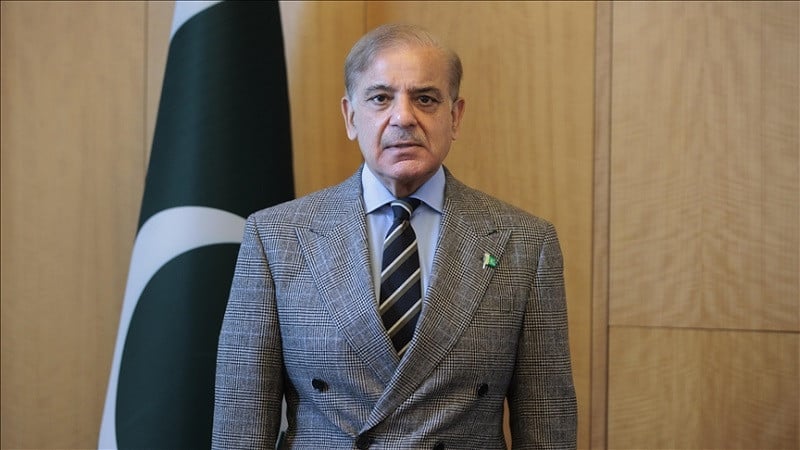
Pakistani Prime Minister Shehbaz Sharif announced the electronic signing of what he described as the historic “Islamabad Memorandum of Understanding” between the United States and the Islamic Republic of Iran, an agreement aimed at ending the war that broke out between the two sides earlier this year. Sharif, whose country served as mediator, explained that the memorandum was signed by the leaders of the two countries and endorsed by him in his capacity as mediator, considering that its signing at the highest level of government reflects both parties’ commitment to a diplomatic resolution of the conflict.
According to the Pakistani prime minister’s announcement, the memorandum takes effect immediately upon signing, with Iran to undertake as a first step the reopening of the Strait of Hormuz, in return for the United States lifting the naval blockade imposed on Iranian ports.
Details published by international media reveal that the document is a 14-point “framework agreement” outlining a general understanding to halt the war and open the Strait of Hormuz, while deferring the most difficult files to later negotiations. According to the text read out by a senior U.S. official, the two sides agreed to an immediate and permanent halt to military operations on all fronts, including Lebanon, with Iran to be permitted to export its oil immediately upon signing the memorandum.
Regarding the naval blockade, the memorandum stipulates that the United States will begin lifting its naval blockade and removing any obstacles facing Iran immediately upon signing, with the lifting to be completed in full within 30 days, and its forces to be withdrawn from Iran’s surroundings within 30 days of the conclusion of the final agreement. As for the Strait of Hormuz, Tehran will hold a dialogue with the Sultanate of Oman and the other Gulf states to determine a mechanism for managing it in the future, in line with international law and the sovereign rights of the states bordering it.
On the economic front, the memorandum includes an American pledge to work with regional partners to develop a plan for the reconstruction and economic development of Iran worth no less than 300 billion dollars, alongside a commitment to end the sanctions imposed on Tehran within a timetable to be set in the final agreement. However, the framework agreement deferred the most sensitive files—foremost among them Iran’s nuclear program, uranium stockpiles, and the mechanism for lifting sanctions—to negotiations extending over 60 days.
In his statement, Sharif extended his thanks to U.S. President Donald Trump for what he described as his firm commitment to diplomacy and his preference for peaceful solutions. He also praised the American negotiating team, including Vice President JD Vance and envoys Steve Witkoff and Jared Kushner. On the Iranian side, he expressed his appreciation for the Iranian leadership, President Masoud Pezeshkian, and the negotiating team, which included Parliament Speaker Mohammad Bagher Ghalibaf and Foreign Minister Abbas Araghchi. He also acknowledged the roles of Qatar, Saudi Arabia, Turkey, and Egypt, as well as the role of Pakistan’s army chief, Field Marshal Asim Munir, in facilitating this breakthrough.
These developments come as the culmination of months of escalation. The war broke out in late February following U.S.–Israeli strikes on Iran, after which Trump imposed a naval blockade on Iranian ports in mid-April following the breakdown of an earlier round of negotiations. As mediation efforts led by Pakistan in coordination with Qatar intensified, the two sides reached a final text of the agreement on 12 June.
The electronic signing is set to be crowned by an in-person signing ceremony on Friday, 19 June, at the Bürgenstock resort in central Switzerland—a venue chosen on the proposal of the Pakistani and Qatari mediators and with the agreement of Washington and Tehran, given the security considerations it offers. It is worth noting that Tehran has linked its entry into the subsequent 60-day negotiations to Washington’s fulfillment of its commitments, particularly the release of billions of dollars in frozen Iranian assets—something U.S. sources have objected to.
اشترك لتصلك أبرز التغطيات والقصص الحصرية من فريق الأسطل مباشرةً إلى بريدك.